
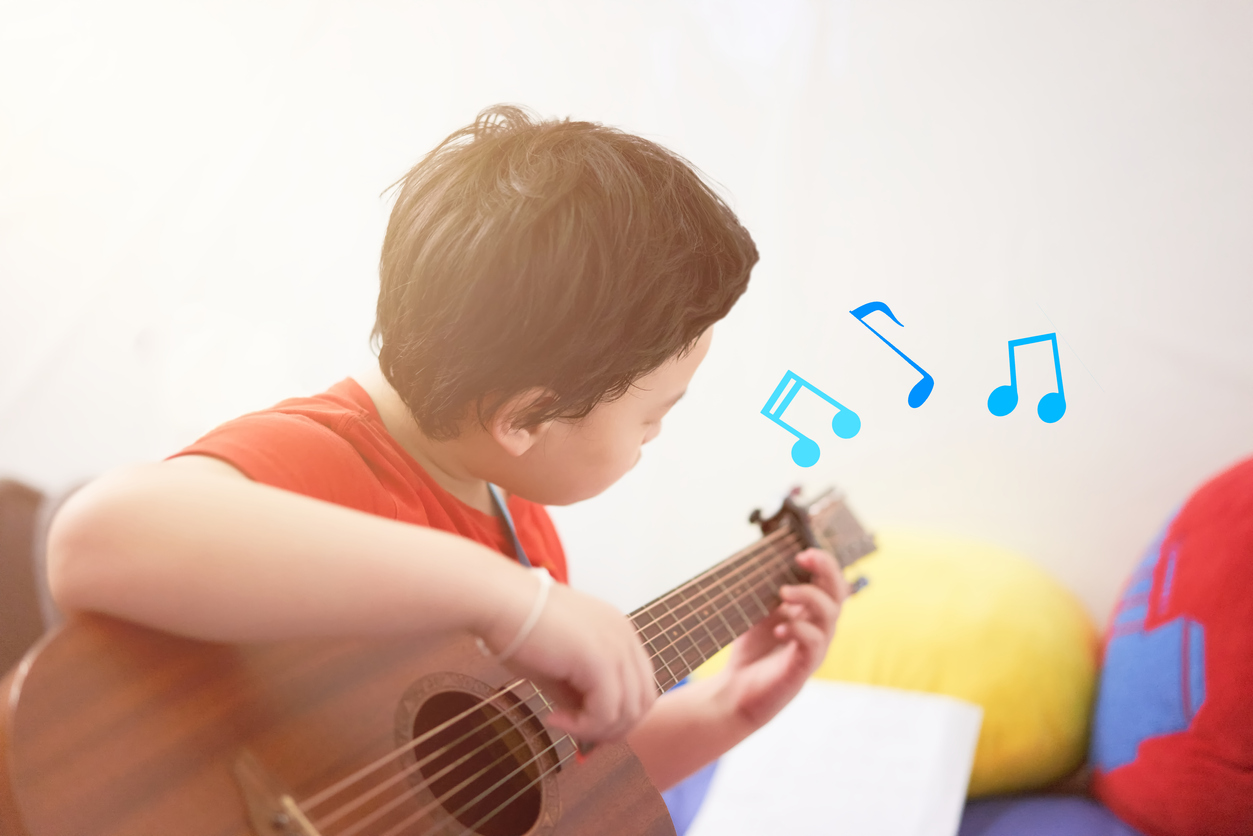
It started with enthusiasm.
Your child wanted a guitar. Maybe they spent weeks talking about it, watching musicians online, or asking whether they could learn their favorite songs. Eventually, you bought one.
For the first few days, they barely put it down.
They learned a chord or two. They watched tutorials. They played the same little riff over and over, and everyone in the house heard it.
Then something changed.
The guitar started spending more time in its case. Practice became less frequent. The YouTube tutorials stopped being interesting, and eventually the instrument ended up leaning against a bedroom wall.
Now it’s November, and you can’t remember the last time you heard anyone play it.
For West Linn parents, this can feel like a familiar story about children losing interest in something they begged to have.
But an abandoned guitar doesn’t necessarily mean a child doesn’t want to learn music.
Sometimes it means they’ve reached the point where enthusiasm alone isn’t enough to move forward.
The First Few Chords Are Deceptively Rewarding
Guitar is an exciting instrument to begin learning because students can get recognizable results relatively quickly.
Learn a few chords, and suddenly familiar songs seem within reach.
A student can watch a video, copy someone’s fingers, and produce something that sounds vaguely like the music they enjoy.
That’s a powerful experience.
The problem arrives when the next step isn’t nearly as obvious.
The student knows three chords but can’t change between them quickly enough to play a song.
Their fingers hurt.
Some strings buzz.
They can follow a tutorial while watching it but can’t remember what to do afterward.
What looked easy on the screen turns out to require considerable coordination.
And unlike the first afternoon, progress no longer happens simply because they picked up the instrument.
This is where many self-taught beginners stop.
Not because they’re incapable of learning guitar, but because they don’t know how to get past the first obstacle.
A Guitar Doesn’t Explain What You’re Doing Wrong
Imagine a student trying to play a G chord.
They position their fingers, strum, and hear several notes mixed with an unpleasant buzzing sound.
They try again.
Same result.
The tutorial tells them where their fingers belong, but it can’t see their hand.
Maybe one finger is touching an adjacent string.
Maybe their wrist position is making the chord unnecessarily difficult.
Maybe they aren’t pressing close enough to the fret.
Or perhaps the guitar itself needs adjustment.
Those problems can sound similar to a beginner, even though they require different solutions.
An experienced guitar teacher can observe the student’s playing and help identify the cause.
That’s a major difference between watching someone demonstrate a technique and having someone teach it to you.
Sometimes the Guitar Itself Is Part of the Problem
Before assuming a child has lost interest, it’s worth looking at the instrument.
Not every beginner guitar is equally easy to play.
A poorly adjusted instrument can make the strings unnecessarily difficult to press. A guitar that’s too large for the student may encourage uncomfortable positioning. Old strings or tuning problems can make even simple playing sound disappointing.
A child doesn’t necessarily have the experience to recognize these issues.
They may simply conclude that guitar is too hard.
Parents don’t need to purchase an expensive instrument to solve every problem. But they should make sure the guitar is playable, appropriately sized, and reasonably comfortable.
A teacher can often help families recognize when an equipment issue is interfering with learning.
What Happens After the First Three Chords?
This is the question that catches many beginners off guard.
The internet is full of individual guitar lessons.
Learn this chord.
Try this riff.
Play this song.
Practice this strumming pattern.
Each video may be useful on its own.
But a beginner doesn’t necessarily know which skill should come next.
Should they learn more chords?
Work on rhythm?
Practice scales?
Improve finger placement?
Start reading music?
Try a complete song?
Without a sequence, students can spend months collecting disconnected pieces of information.
They know a little about many things but can’t reliably play anything from beginning to end.
Structured instruction helps connect those pieces.
Through music lessons by instrument, families can explore private instruction designed around a student’s current abilities rather than whatever tutorial happens to appear next.
The Problem Might Be the Music They’re Learning
There’s another reason guitars get abandoned.
The student wanted to play one kind of music but ended up practicing something completely different.
Maybe they were inspired by rock music but have spent their limited practice time working through exercises that don’t seem connected to anything they enjoy.
Technical exercises have a purpose. Students need to develop coordination, rhythm, and control.
But they also need to understand where those skills are taking them.
A good teacher can connect foundational work to music that matters to the student.
That doesn’t mean every lesson becomes a request session for favorite songs.
It means a student learning chord changes should eventually recognize how those changes help them play music they actually want to hear.
Motivation becomes easier to maintain when practice has a destination.
West Linn Families Don’t Need Another Daily Argument
By November, school routines are well established.
Families around Willamette, Bolton, and Hidden Springs are balancing homework, activities, transportation, and everything else that fills a weekday.
Adding guitar practice can easily become another source of conflict.
A parent asks whether the student practiced.
The student says they’ll do it later.
Later never comes.
Eventually, the conversation becomes less about music and more about the money spent on the guitar.
That pressure rarely makes the instrument more appealing.
Instead of demanding an hour of practice, start by identifying one manageable task.
A beginner might spend ten minutes improving a chord transition or practicing a short section of a song.
The goal should be specific enough that the student knows when they’ve accomplished something.
Consistent, manageable practice is usually more useful than occasional marathon sessions motivated by guilt.
Don’t Make the Price of the Guitar the Reason to Continue
Parents understandably dislike seeing an expensive purchase go unused.
But reminding a child how much the guitar cost doesn’t teach them how to play it.
It may make them feel guilty, but guilt and musical interest aren’t the same thing.
A more productive conversation might begin with:
“What made you want to play guitar in the first place?”
The answer could reveal that the original interest is still there.
Maybe they still love the same band.
Maybe they still want to learn a particular song.
Maybe they’re embarrassed because they expected to be better by now.
Or perhaps they’ve discovered that they enjoy listening to guitar more than playing it.
Those possibilities deserve different responses.
A Few Lessons Can Reveal Whether the Interest Is Still There
Private lessons don’t guarantee that every student will become enthusiastic about guitar again.
They can, however, provide useful clarity.
A teacher can evaluate what the student already knows, identify technical problems, and introduce a realistic path forward.
Sometimes the student discovers that the instrument becomes much more enjoyable once someone helps them through the difficult parts.
Other times, lessons reveal that their interests have genuinely changed.
Either outcome is more informative than allowing the guitar to sit untouched for another six months while everyone wonders what happened.
Don’t Confuse a Slow Start With a Lack of Ability
One of the more unfortunate things about guitar is that the instrument can feel physically awkward in the beginning.
Students are asking their fingers to perform movements they rarely use in everyday life.
They need to coordinate both hands, maintain rhythm, and listen to the result simultaneously.
That takes time.
A student who struggles with chord changes during their first month isn’t demonstrating a lack of musical talent.
They’re learning a difficult physical skill.
The question is whether they’re receiving enough guidance to make the process manageable.
The Guitar Can Come Out of the Corner
An unused guitar isn’t necessarily a failed investment.
It may be a sign that the student needs a clearer plan, better technique, a more suitable instrument, or music that reconnects them with their original interest.
For some students, that means beginning private lessons.
For others, it means adjusting expectations and making practice less intimidating.
And occasionally, it means acknowledging that the student wants to pursue something else.
At Oregon City Music Academy, we believe the important thing is understanding what stopped the learning process rather than simply telling students to try harder.
If your child in West Linn has a guitar that’s gathering dust, contact OC Music Academy to discuss guitar lesson options and whether structured instruction could help them move forward.
The instrument may have been sitting quietly for months.
That doesn’t mean the original interest has disappeared.
Sometimes the missing piece isn’t motivation.
It’s knowing what to do next.